Developing an AI-powered job search to boost conversions
The job search is without doubt the most important element of any careers website. With artificial intelligence and tools like ChatGPT taking center stage in 2024, we at New Work Group explored ways to optimize our job search by implementing AI technologies into our job search. Using AI for job searches offers great opportunities. Imagine a job search where candidates can ask any question that comes to mind: What is the company culture like? What does the tech team look like? What can I expect in a certain role? A job search that not only presents candidates with the jobs they’re looking for but also provides real insights to answer their questions. This article discusses how we developed an AI-powered job search at New Work Group, what we learned, where we failed, and whether it was worth it.
Time to go live: 6 month
Reading time: 12 minutes
Client: New Work SE
In this article
1. The problem
Analysing our data
Looking at our numbers in 2024, we noticed a big problem: an 87% bounce rate on the careers homepage! At New Work, we had nearly 800,000 visitors to our careers section last year. While that’s impressive in terms of traffic, it’s easy to see that such a high bounce rate combined with this level of traffic means we’re missing out on a substantial number of potential applicants. When we dug deeper, we identified user behaviour that basically told us that many of our user do not find what they are looking for. This was especially clear when seeing how many visitors clicked around in the menu but left shortly after.
87% percent bounce rate on the careers home page
A menu that fails to provide what visitors are looking for.
Website visitors that basically have no patience to look for what they need
A job search feature with some serious weaknesses
User feedback
I love feedback from real people. While analyzing data is valuable and often reveals weaknesses, it can be difficult to interpret. User feedback always provides honest and clear insights. We discovered that much of the content on our website, especially in the menu, goes unnoticed. Those looking to learn more about us as an employer often struggled to find the right information. And yes, we all know this, but it’s worth repeating: passive job seekers don’t stick around long if they don’t find what they’re looking for. Although job seekers could easily locate our job search, we uncovered serious flaws in the search functionality. I can only advise every recruiting and employer branding team to frequently test their own job search thoroughly. For us, this was quite eye-opening. Sometimes, simple searches got no results, even when there were relevant jobs available. This issue was primarily due to the search engine’s inability to recognize relevant synonyms, highlighting a clear area where we had to improve.
Website visitors that basically have no patience to look for what they need
A job search feature with some serious weaknesses
2. The solution
Now that we knew our weaknesses, we began brainstorming ways to address the problems mentioned above while also looking into the quite exciting possibilities an AI-powered job search could offer. I love this phase, as we usually completely neglect the budget, the timeframe, and our limited resources and come up with some wild ideas, which is always fun.
Let´s make navigating the website easy as …
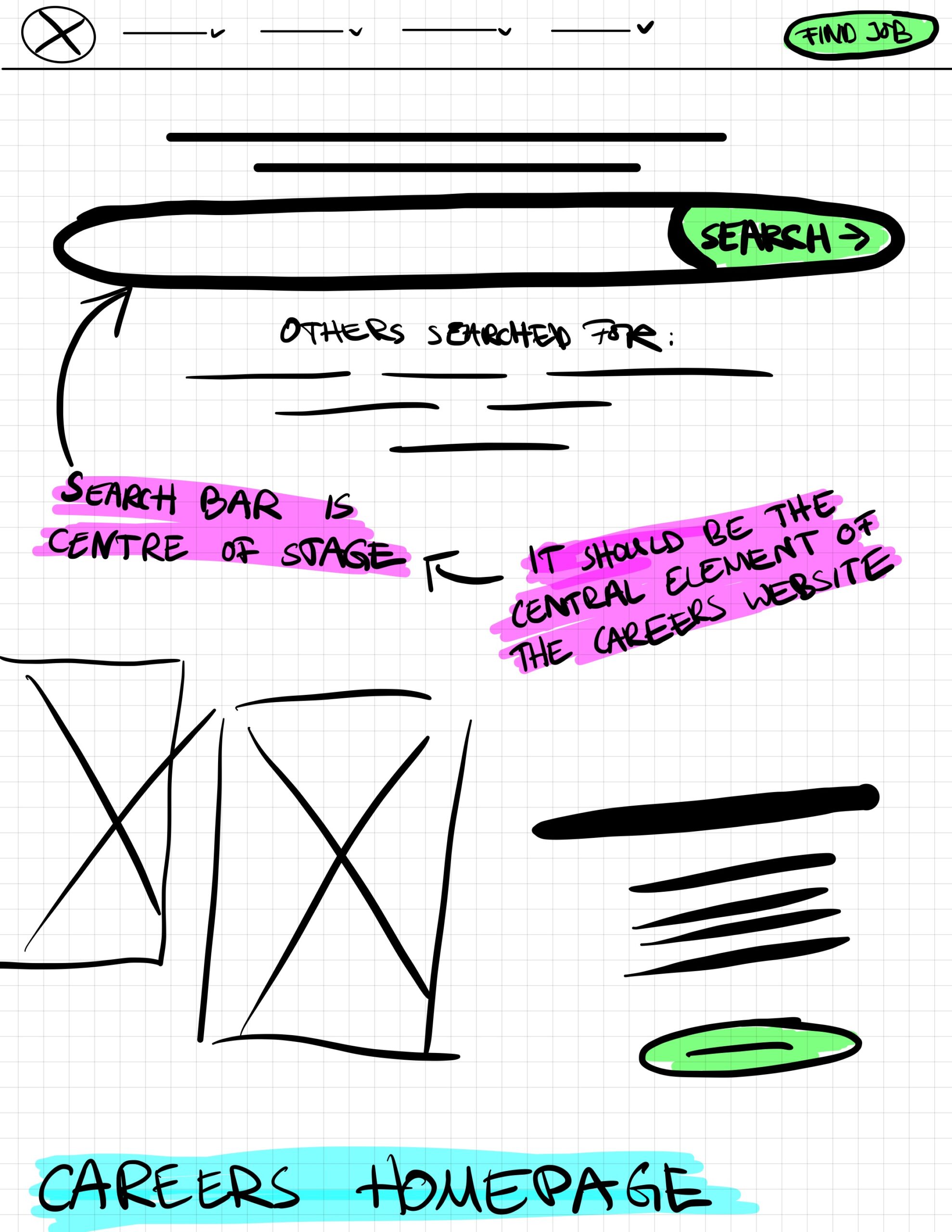
Looking at the feedback from our user and seeing how many users bounce off after going into our website menu, it was clear that we wanted to improve the navigation of the website. Our visitors should be able to easily find what they are looking for. And that should not mean they have to scroll up and down the website, or click through a menu. So who said actually a job search on the careers website only has to show jobs? We have all this content that is relevant to our website visitors, even when searching for jobs. Why not open content into the search and let visitors search for more than just jobs. We wanted to make it possible that even the ones just interested in benefits, or culture do find what they are looking for when interacting with our search. We wanted the job search to become the central element to navigate our website!
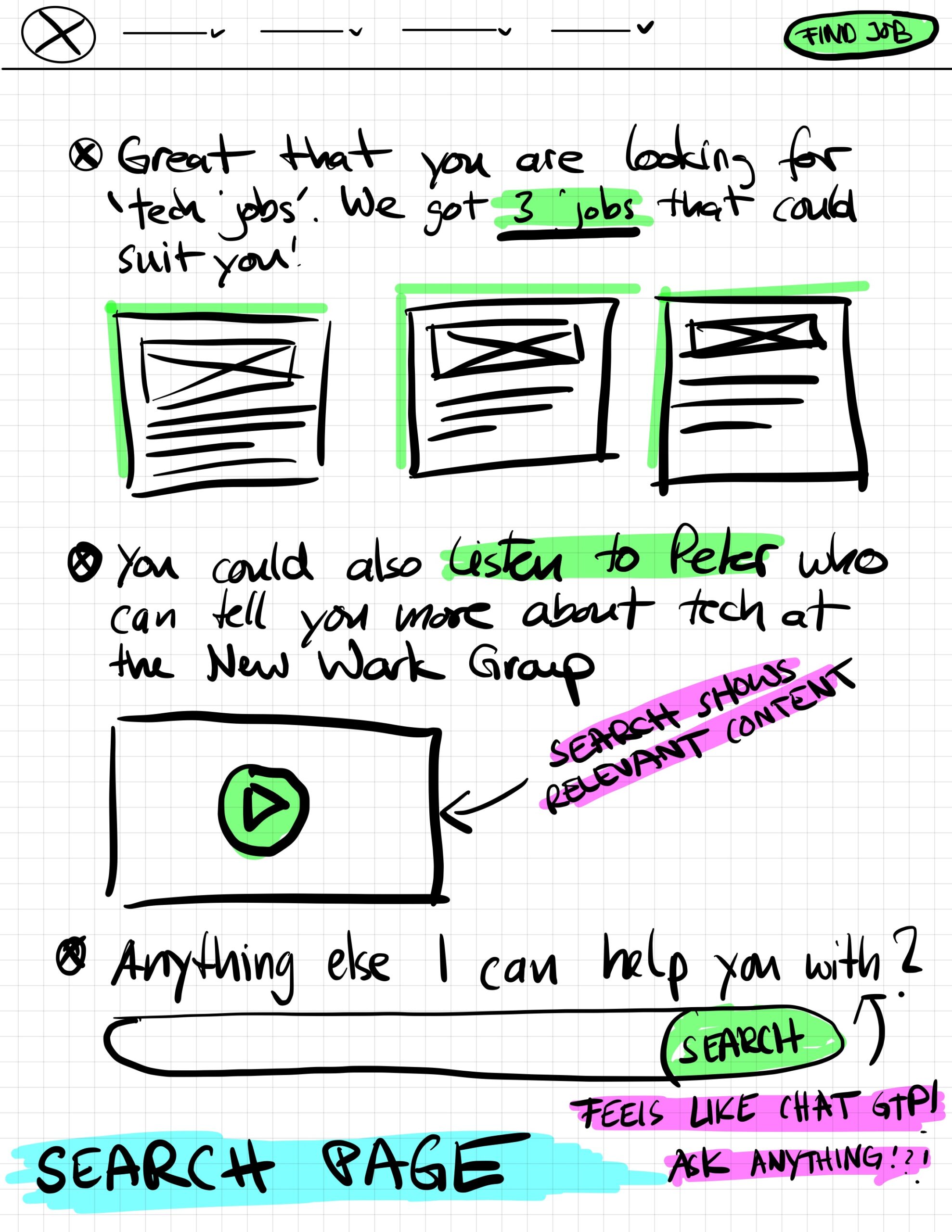
Let´s make searching for jobs feel like talking to Chat GPT!
2023 and 2024 were all about ChatGPT. With AI being that advanced, it was basically a no-brainer that we wanted to venture in this direction: a search that can honestly answer all the questions candidates have and make it feel like they are actually talking to someone, just as we all experience when interacting with ChatGPT. To be honest, the ideas were unlimited. As much as I would have liked to see how it feels to search for jobs in a setting similar to that of using ChatGPT, unfortunately, this is the point where we slowly had to pull back and consider our budget, the time frame, and what was actually possible with the development resources we had available to this project.
Budget, timing, ressources…cutting it down and making it something a HR team wants to invest in
After all the brainstorming and coming up with great ideas, this is always the hardest part. But let’s be honest: budgets in employer branding are usually small, resources are limited, and we are not developing a product we want to sell to make big bucks or that has millions of users. From a business perspective, it is still just a career website. It’s important, but not that business-critical. For me, it is important to really create value with what we do, and most often this means we cannot develop the product we would love to. Instead, we need to focus on creating the product that actually delivers the results we need. So, while we decided not to use ChatGPT, both from a budgetary and technical perspective, we still wanted to leverage AI technology and incorporate open content in our search, making it possible for users to use the search bar as the central element to navigate our careers website, tackling both our high bounce rate, and improve our conversion rate for job searches.
3. Key features
An AI-powered job search that accurately understands what the user is looking for and finds the perfect job.
A search that can handle conversational inputs such as "show me..." and "I’m looking for...", creating a more engaging search experience
A search that uses personalization features to better understand and remember our users' interests
A search that continuously learns which results trigger applications and optimises search results for better conversion rates
A search that allows us to modify results to highlight certain job ads or content in order to boost conversions
A search that not only shows job ads but can also answer career-relevant questions and feature content from our careers website
A search that is easily accessible from everywhere on the website and provides a user-friendly search experience
4. What we came up with
Putting the search module front and centre
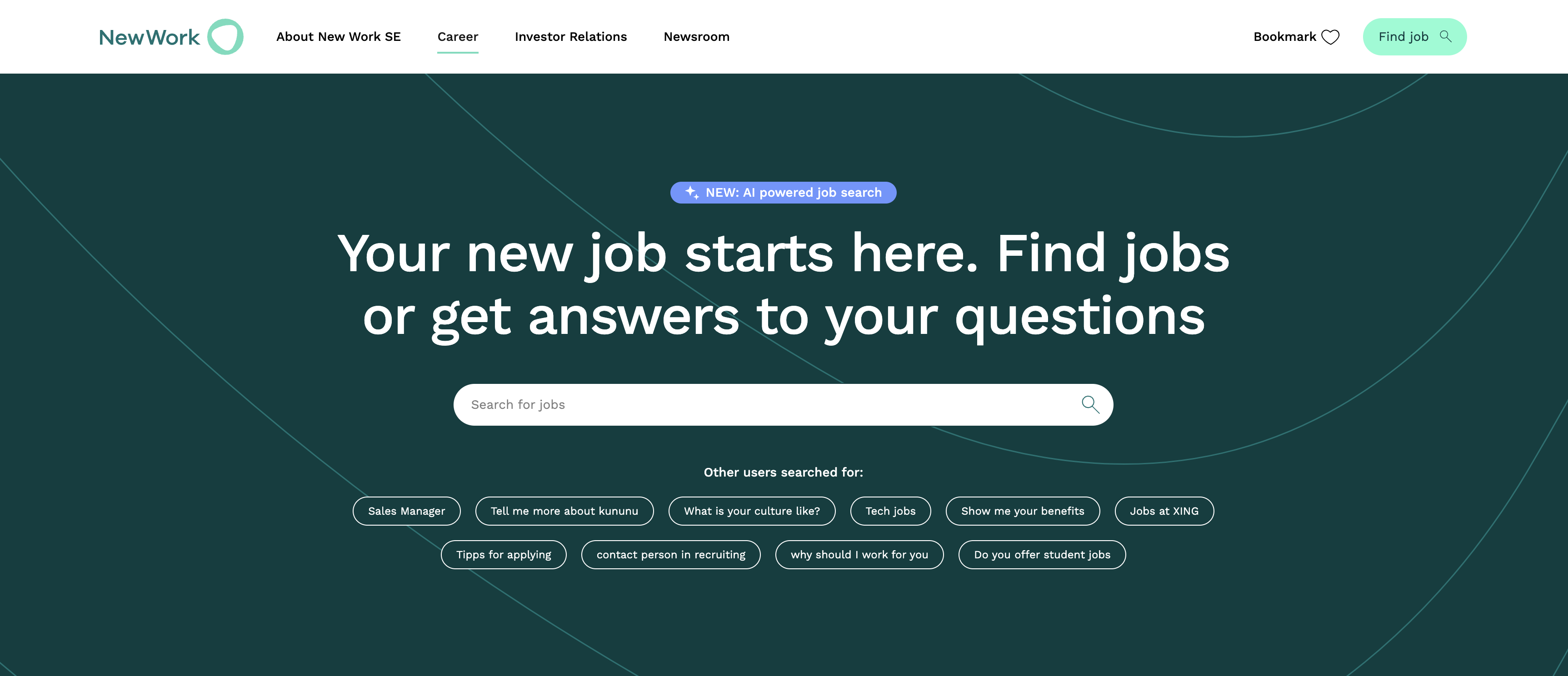
Okay, I admit it: putting the job search module front and center isn’t a groundbreaking idea for a career website. Sure, we previously made it easy for users to access the search with a prominent button on the main page, but the search bar itself wasn’t the first thing visitors saw when previously entering the New Work careers website. Based on user feedback, we wanted to make the search the central element of our site, encouraging every visitor to interact with it—no matter what they’re looking for. So, we decided to eliminate all unnecessary elements from the first view port. We removed images and took a very minimalistic approach on the design, making sure that the search bar truly stands out and grabs our users’ attention.

Motivating users to really challenge our search
When we first tested a conversational AI search, we quickly realized that the average job seeker wasn’t using it the way we had hoped. Darn it! They were just typing in their usual job titles and checking the results. And honestly, you can’t blame them—that’s how job searching has worked for the last 25-30 years.
We knew we had to encourage users to share more important skills and expectations about their job preferences, and to think beyond just job titles. To help with this, we added an AI label on top of the search to open their minds and motivate them to explore the search feature more than they typically would.
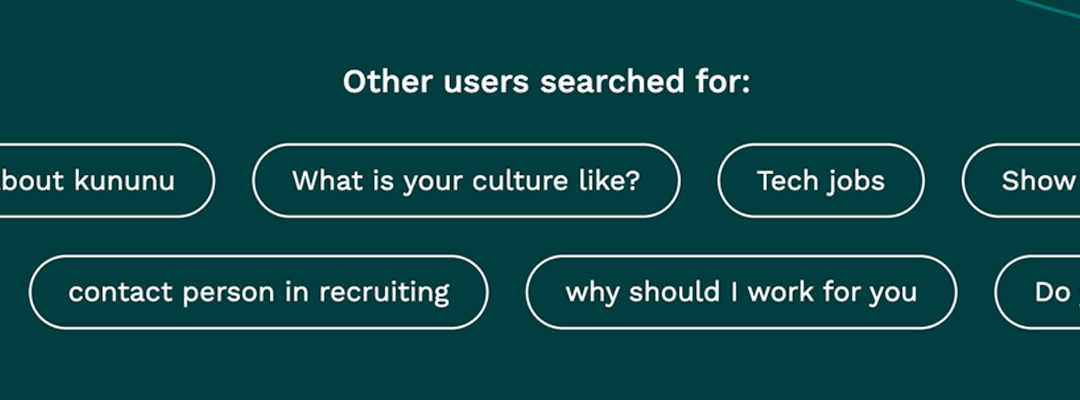
We also included a section below the search that shows what other users have been looking for. I admit, there is a bit of an overload on recommendations, but we really wanted to make a point that users can search for everything. We programmed the recommendations in a way that we can influence what appears there and suggest terms that might spark our users’ imagination. An interesting finding after launching the search: the suggestions are actually the search terms with the most hits, and they work great for promoting certain jobs or job fields!
Search suggestions below the search bar are clicked on a lot by our users and they work really well to feature certain jobs or content!
Having the search everywhere at your fingertips
Using a overlay to open the search
Our goal was to make the search function the heart of our career website, providing answers to all career-related questions. We wanted to ensure that the search is always accessible, no matter where you are on the site. To do this, we created two flexible modules for the search. The first is the stage module, which we always place at the top of the search area, and the second can be inserted between content or at the bottom of the page.
We also made it super easy to access the search through our button in the top right corner, the footer, and any other buttons we might add later. One new approach we took was to avoid having users navigate to a completely different search page each time. Instead, we wanted the search to open quickly and be just as easy to close when you’re ready to go back to where you were.
That’s why we implemented the search in a overlay. This way, you can access it from anywhere on the site and close it whenever you want, letting you seamlessly return to your previous spot.
Opening the doors to conversational searching
We wanted the search experience to feel as close as possible to a fully conversational interaction. Inspired by technologies like ChatGPT, we aimed for our AI search to truly understand conversational queries and provide users with the results they’re looking for. By prioritizing this conversational approach, we ensure that interacting with our search feels natural and intuitive, making it easier for you to find exactly what you need.
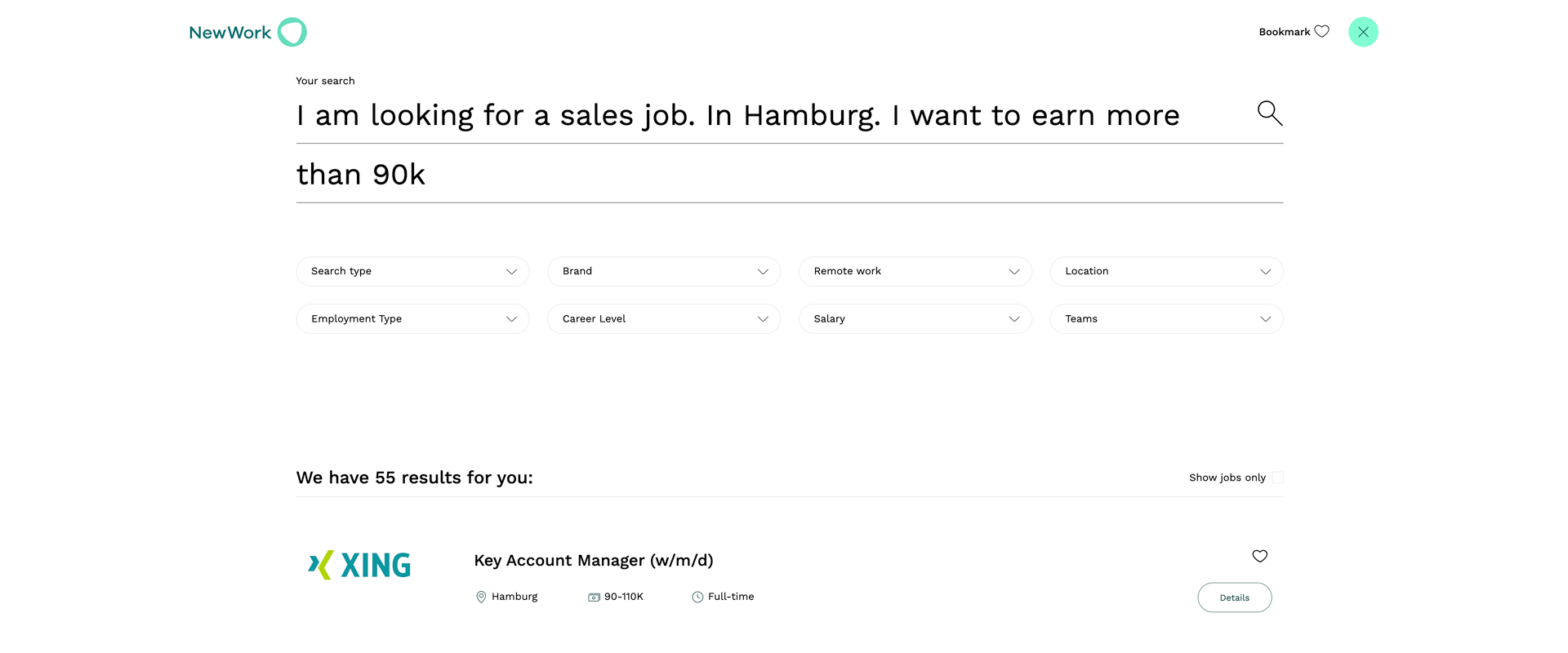
A blank canvas for all your job search needs
From a UX perspective, we wanted to ensure that the entire search experience feels fantastic and fresh compared to traditional job search platforms. When you open our search for the first time, you’ll encounter a minimalistic overlay that we designed to represent a blank canvas—encouraging you to fill it with the jobs, skills, or questions you have in mind.
As you start typing in the search bar, it naturally expands downward, giving you the freedom to express as much as you want. This design is all about making sure you feel like you have no limitations in your search.
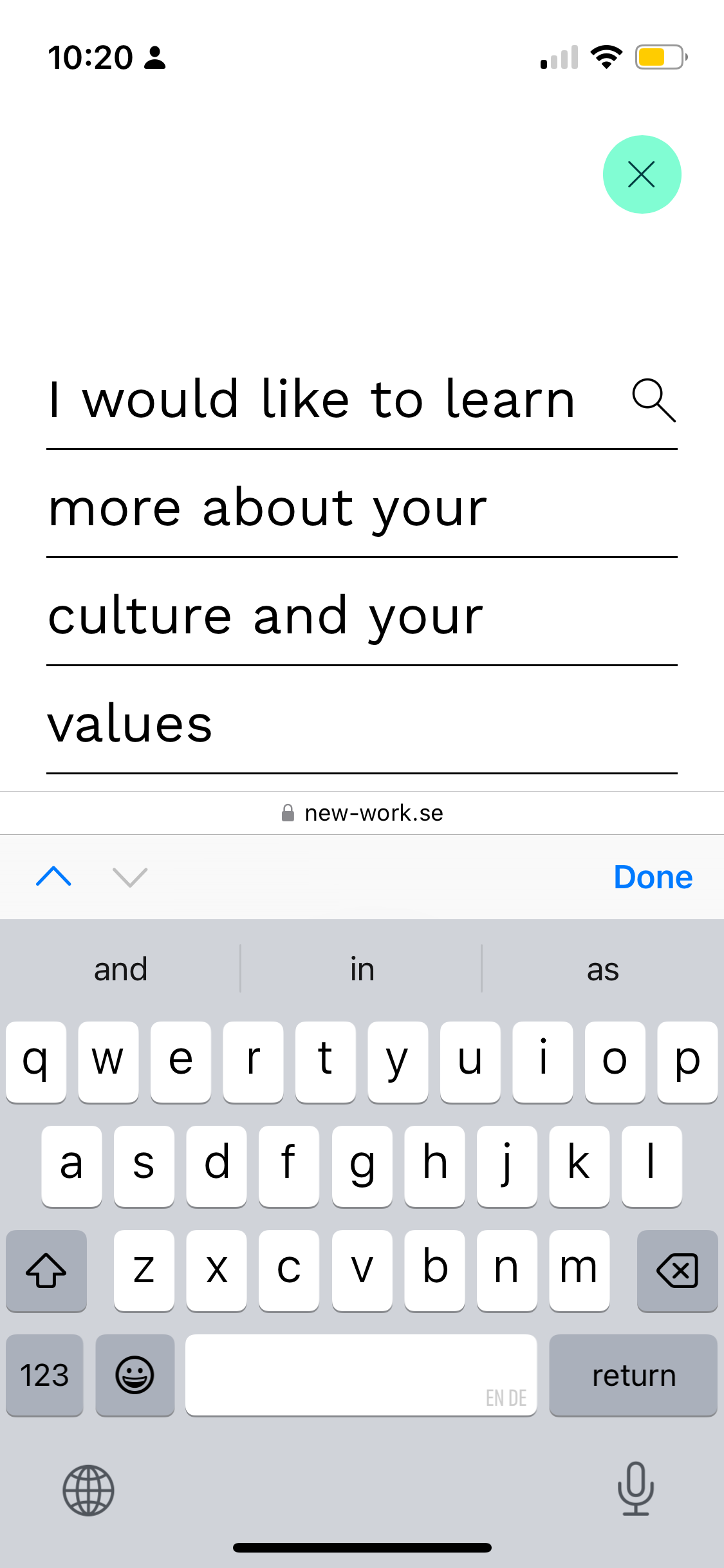
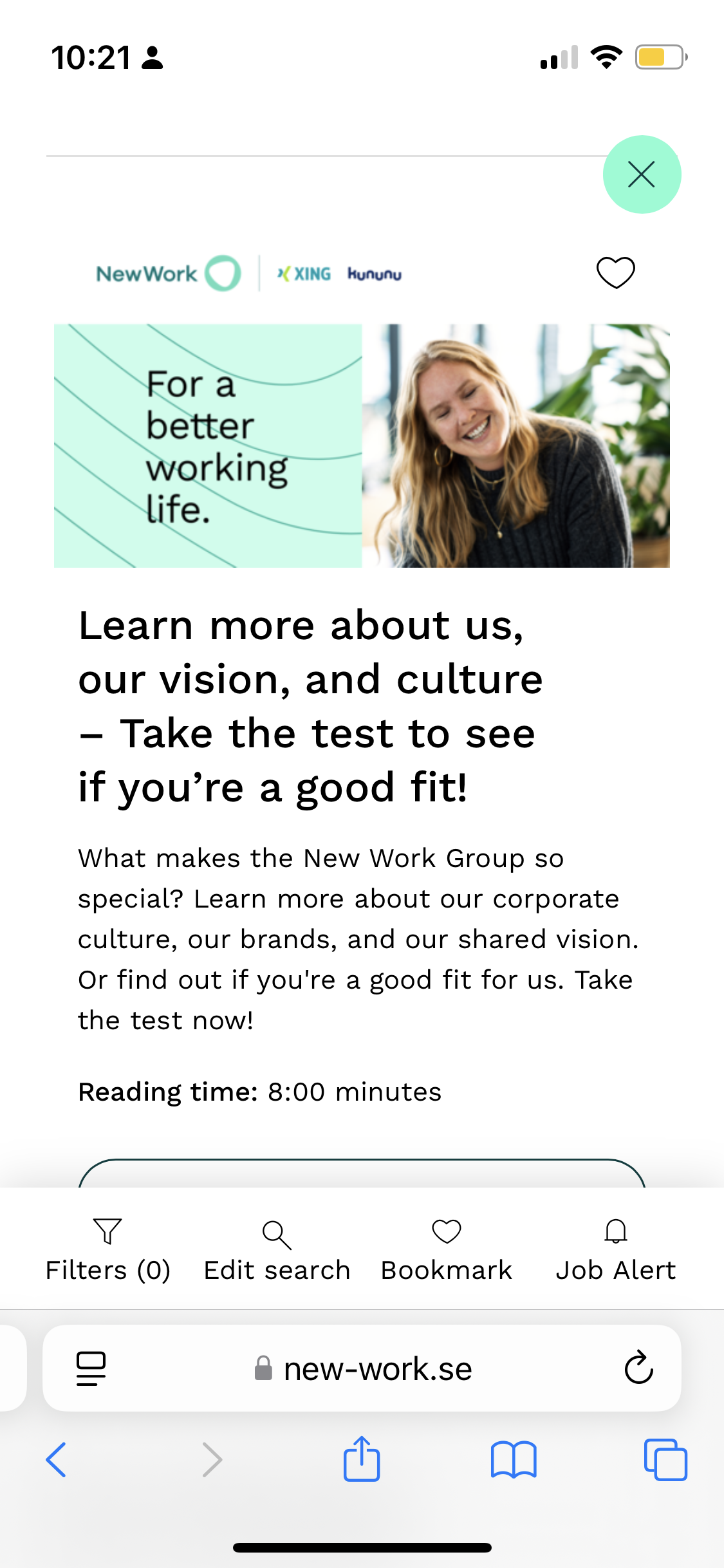
Conversational search still needs learning: Both for the user and us
We wanted the search experience to feel as close as possible to a fully conversational interaction. Inspired by technologies like ChatGPT, our aim was for our AI search to truly understand conversational queries and provide users with the results they’re looking for. We wanted interacting with our search to be natural and intuitive, allowing users to input as many job-related wishes or keywords as they wanted to discover the perfect job.
However, we quickly encountered limitations with our AI technology and the resources at our disposal. An advanced AI language model would have streamlined this process, but due to budget constraints, timing issues, and potential risks associated with using a model like ChatGPT, we had to reconsider our approach. Our current AI technology struggles when search terms become too lengthy. Since it can only access the information available on our website, we can’t guarantee that every query will be fully covered. While we can train our AI tool to respond effectively in certain situations, it’s challenging to anticipate every possible query. Setting this up requires a significant amount of time and resources, and we’ve reached the limits of what the Employer Branding team at New Work Group can accomplish. As a result, the search capabilities are not yet where we want them to be, but the good news is that the system is designed to learn and improve over time.
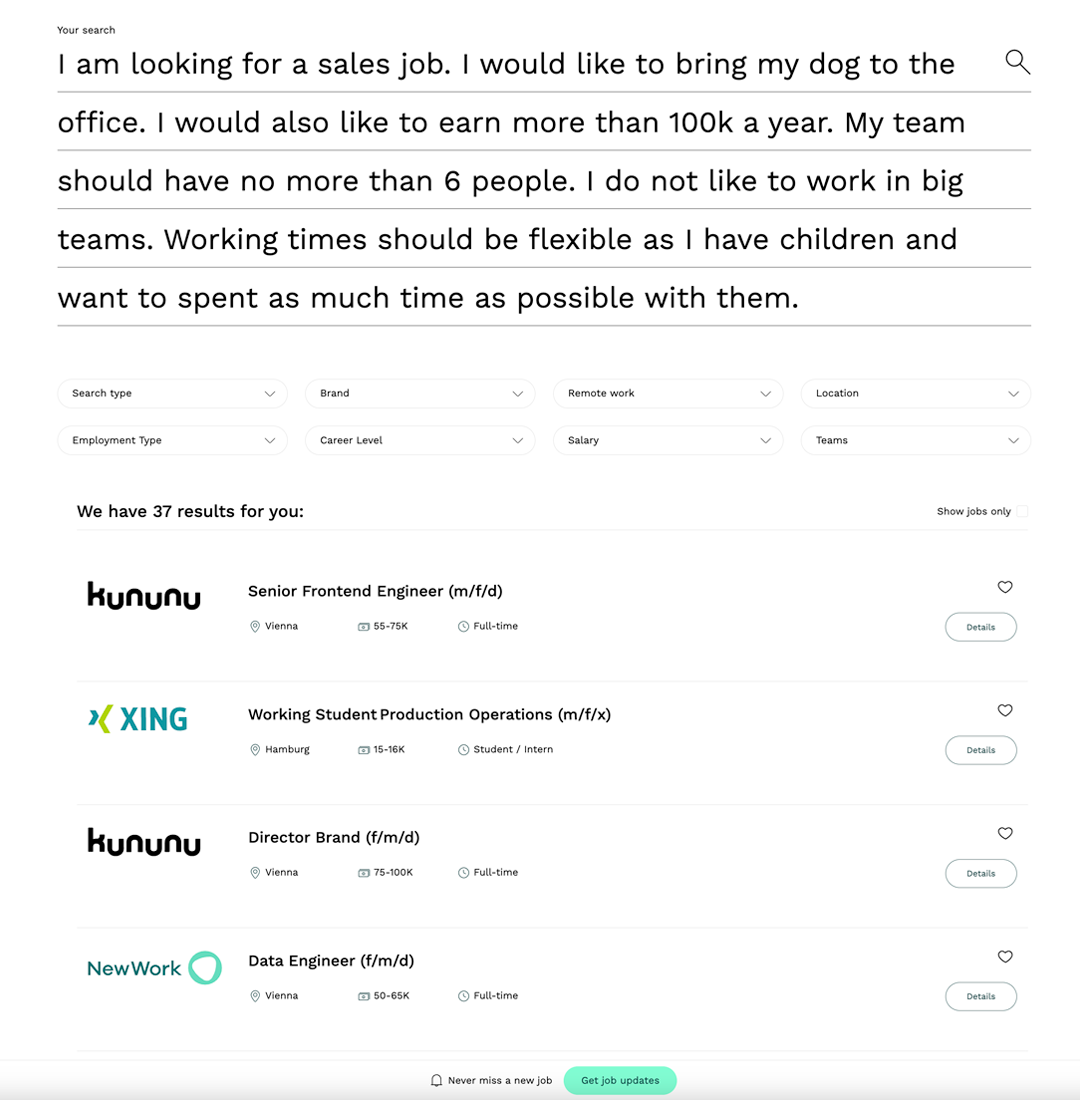
Interestingly, it seems users aren’t quite ready for a conversational search experience when looking for a job anyways. Despite our efforts to encourage users to engage in a conversational manner, only 3% of them utilize the search in this way. Most job searches still rely on two or three keywords or simple job titles. This was evident from our initial tests, and even after the search has been live for 3-4 months, we haven’t noticed a change in user behavior. Job searching is a skill that has been developed over many years, and it’s unrealistic to expect users to adapt their job search habits overnight and suddenly write lengthy and detailed wished on how their next job should look like. But I am sure that is where the future of job searching goes.
Only 3% percent of users take a conversational approach when searching for their next job.
Optimising conversion rates by integrating content into the job search
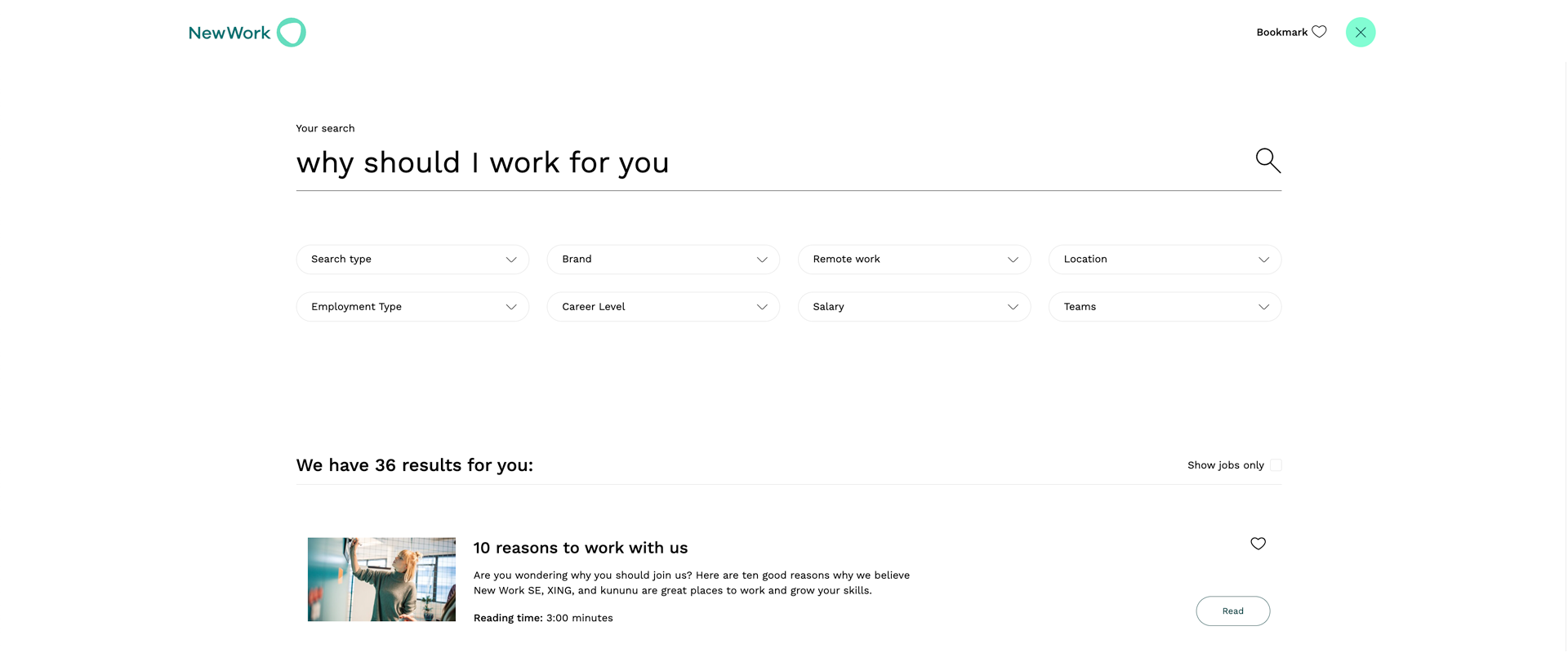
One of our key ideas for the new search was to integrate content, allowing us to offer not just job listings but also relevant resources from our website. In the beginning we learned through our data and user feedback that many visitors quickly bounce from our career site because they can’t find what they need. From the beginning we wanted to create a search that not only offers job openings, but also answers career relevant questions. By integrating content into the search, we give our users a search bar where they can simply ask whatever question brought them to our site and receive appropriate answers. Things like who is my recruiting contact, how does the application process look like or even questions like what are your benefits, what is your culture like or why should I actually work for you will now be answered by our search.
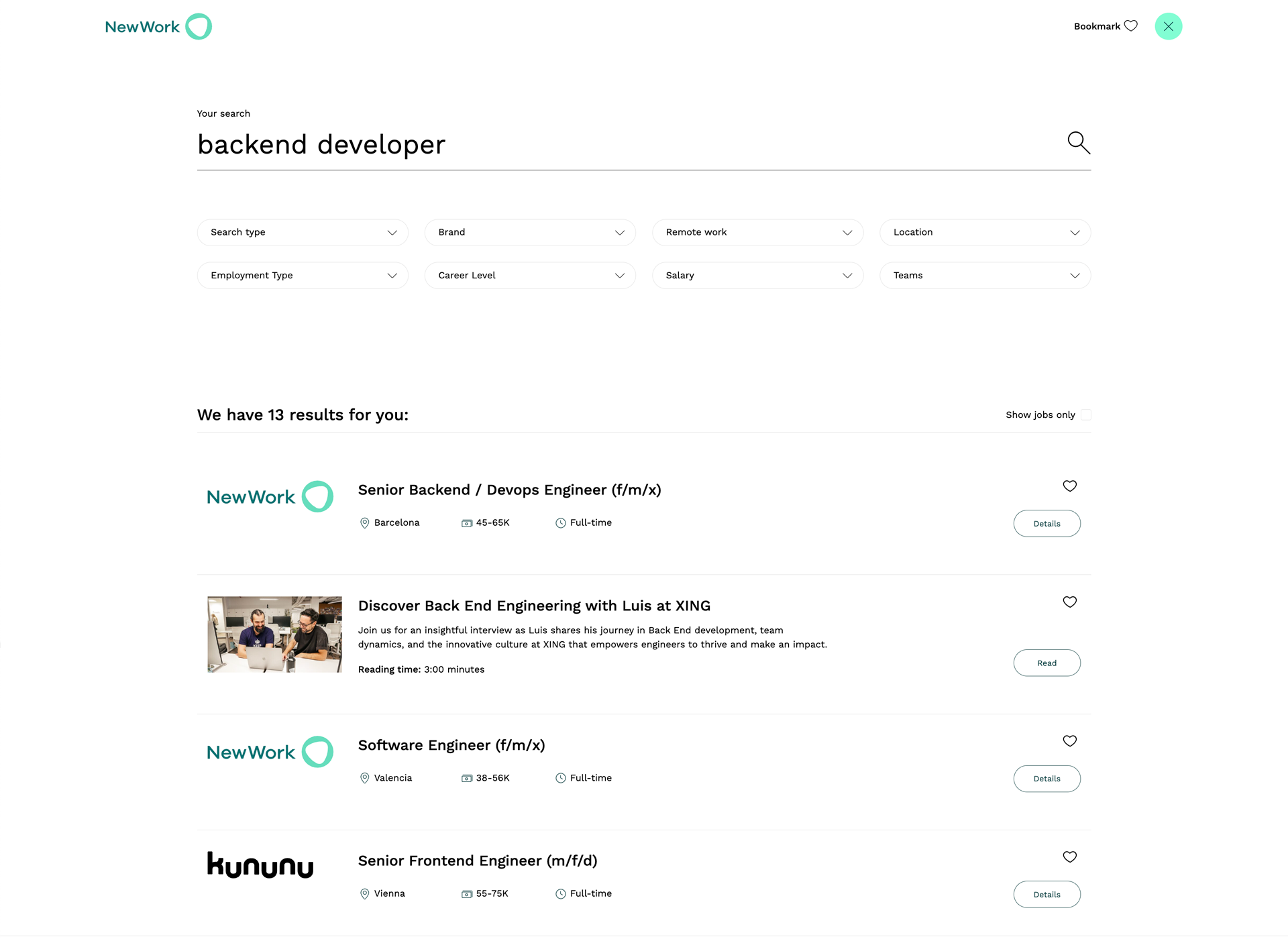
Adding content to our search results also created a great opportunity to boost our conversion rates. User feedback revealed that much of our content goes unnoticed — around 80% of our users come for job ads rather than directly for our content. But pretty much all the content we have on the careers website has the goal to actually convince people to join us, by showing them what they can expect and how it is to actually work for us. But most people do not take the time to scroll through our website to find all relevant employee interviews, videos etc. Now that we included content into the search we can actually promote it within the job search. Meaning if someone types in “backend developer” they will not only see suitable job ads but also an interview with a backend developer that can give them more insights on the job, increasing the chance for an application.
4. Was it worth it?
We reduced the bounce rate by 28%
We have increased our overall conversion rate by 46%
The user interaction rate for the search went up 34%
Integrating content to the search has a really positive effect on conversions and content traffic
Conversational searching did not take off
Teaching the search how to behave in certain situations was a lot more time consuming than originally expected
The good, the bad, and the AI!
Honestly, I am really happy with the results we came up with for this project. The numbers after launching the search are great and speak for themselves. We nearly doubled our application conversion rate, which is a huge win for the Recruiting and Employer Branding team at New Work. More than 80% of our website users now actively engage with the search feature, and we successfully reduced the bounce rate to the mid-60s. Yeah, this could probably be even lower, but a website called New Work really does attract a lot of “bad” traffic. Many people come via Google expecting the New Work Group website to offer jobs from around the world, which of course we don’t. So we are also pleased with reducing the bounce rate to the mid-60s. The decision to integrate content into the search was also a real win—our content has seen a great increase in traffic simply by being accessible through the search. Even more exciting, we’ve observed that visitors who explore the employee interviews featured between job ads are applying at higher rates, positively affecting our application conversion rate.
But, of course, there were also many moments when I hated this project. A real bummer was, and still is, that we clearly had limitations regarding our AI model. In the beginning, it was always the dream to create something like ChatGPT that has a good answer to everything when searching and feels more like a conversation. Unfortunately, we did not manage to achieve that due to budget, timing, and resource constraints. Additionally, conversational searching has not really taken off yet. But given that our AI is not advanced yet, it turned out to be a good thing for us. That brings me to my last point: setting up a search, teaching it how to behave in certain situations, and even monitoring it takes a lot of time. It’s a lot of fun and definitely worth it, but it required more resources than originally expected.
Overall, developing an AI-powered job search has improved the user experience and lifted pretty much all our key performance metrics. Compared to what we had before, it is nevertheless so much better and was definitely worth it. I can only advise you that if you have a career website that attracts a good amount of traffic and you have a substantial number of job openings to fill, do invest in your job search. It makes a difference!
Thinking of creating a new job search? Say hello! Let’s connect
By clicking submit I agree to the processing of my personal data in accordance with the Privacy Policy

Johannes Wichmann
Karolinenstraße 16
20357 Hamburg
Germany
+49 172 451 48 66