Forget your typical CV upload! How we developed a tool that will create application forms that will double your conversion rates
As a Product Manager and Employer Branding Manager at the New Work Group, I’m constantly thinking how do we better connect with applicants and how can we further optimise our conversion rates? In the recruiting world, this isn’t just about showing off your cool office or team events; it’s also about having an application process that actually performs.
This article is about a very exciting project I was able to lead at the New Work Group: developing a application tool for our brands, including XING, kununu, onlyfy, and honeypot. Our mission was simple but also quite ambitious: create a seamless, mobile-friendly and convincing application experience that adapts to different target groups and, most importantly, eliminates the need for a traditional CV. Our goal behind this? Our goal was to drive up conversion rates and, even more importantly, get people who are on the fence—or just too lazy to update their CV—to also hit the apply button.
But was it worth it to create a tool from scratch? Let’s dive in.
Time to go live: 6 month
Reading time: 12 minutes
Client: New Work SE
In this article
1. The problem: When applying feels like an annoying chore
We realized the CV upload was absolutely killing our application conversion rates.
2. The solution
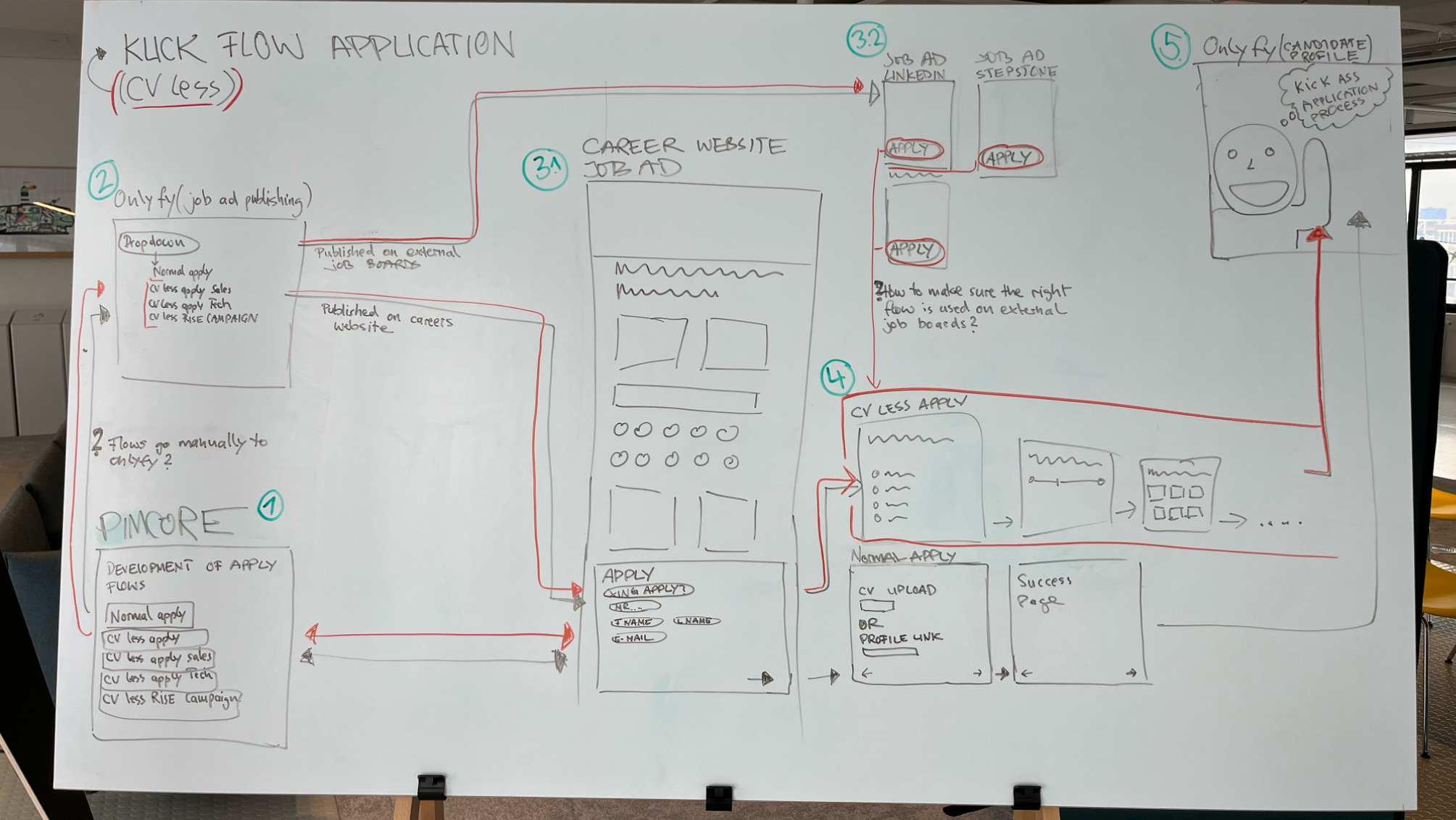
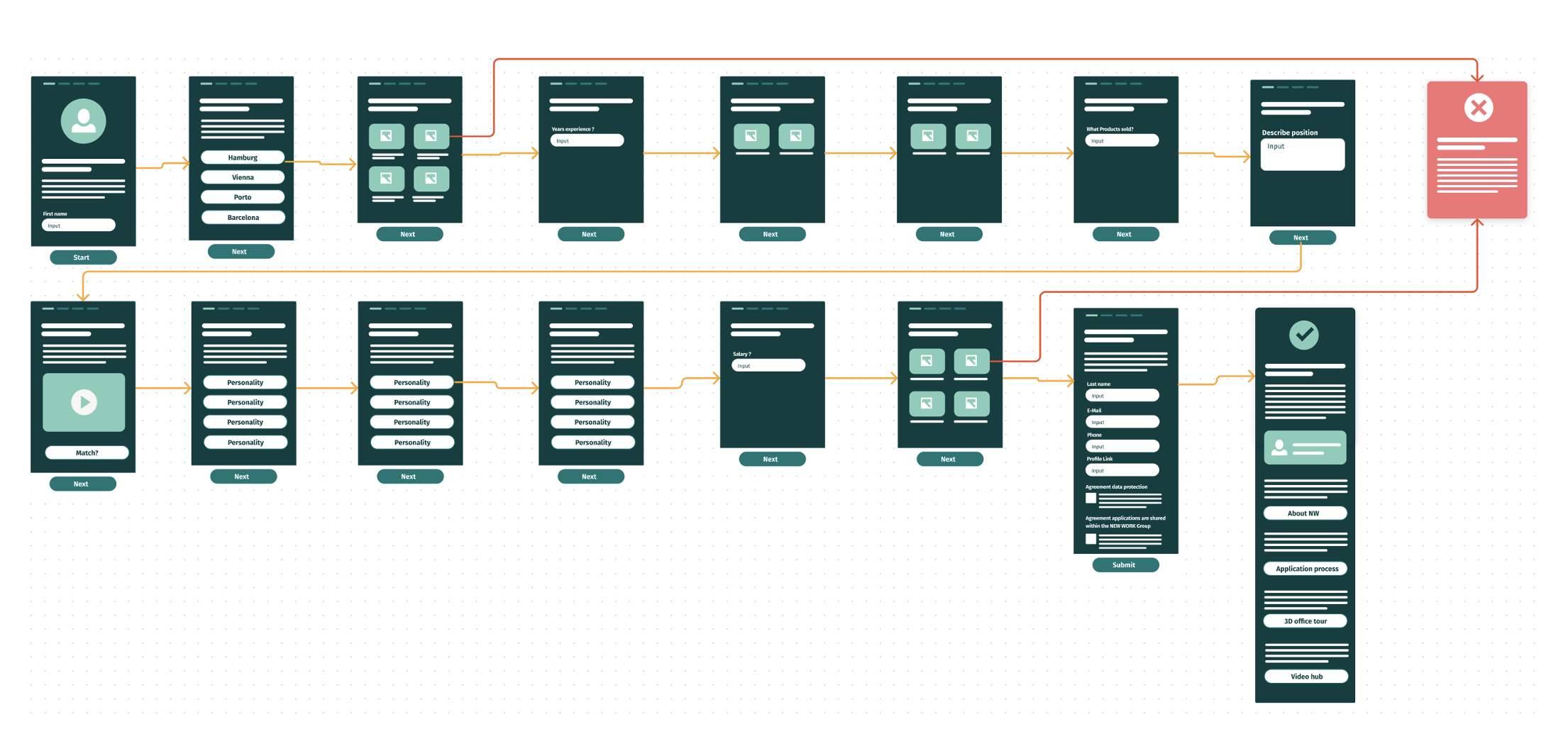
We held several workshops to define our vision of what our new application process tool should be able to deliver. The picture above is one of the first sketches of how we envisoned the tool to function across our existing recruiting set up. Looking at this first sketch made it already quite clear, that we would face a slightly more complicated project. However, looking at the performance of our existing application forms, especially when it came to our mobile traffic, it was clear that we wanted to get rid of it and find a smart solution. We needed a tool that was powerful and flexible in creating application forms, but above all, focused on the candidate experience. And that also meant that somehow, we needed to manage to get rid of the CV upload button. We looked at external tools, but none gave us the flexibility we needed to serve five different brands with unique employer branding goals. So, we decided to build it ourselves.
As always, we had to be realistic about our budget and resources, but we were uncompromising on the core features. The new tool had to:
Mobile-First Design
The experience on a phone had to be simple, fast, and even a little fun.
Allow for true personalization
We wanted recruiters and employer branding managers to be able to create truly unique flows for different target groups.
Make it easy to build
The backend needed to be intuitive enough for our team to create new application flows on the fly without needing a developer
Measure everything
Conversion tracking was a must so we could prove the ROI of our work and optimise performance for our social campaigns.
Be CV-free
We needed the option to create application forms that do not rely on a CV upload or a LinkedIn profile link
3. The outcome: How to actually generate application forms without a CV upload or profile link
The biggest potential of our new tool lay within the possibility to create application forms without the need for a CV or a LinkedIn profile link. We realized this was the biggest conversion killer for us, especially for all the mobile traffic landing on our job ads. We wanted to create an application process that feels more like a conversation with a recruiter, where you actually tell them what your skills are, instead of handing over a sheet of paper. We wanted something so intuitive and easy that even if you just have a slight interest, you can go through with it right in that moment.
We wanted to create an application process that feels more like a conversation with a recruiter, instead of just handing over your CV.
From static forms to dynamic flows
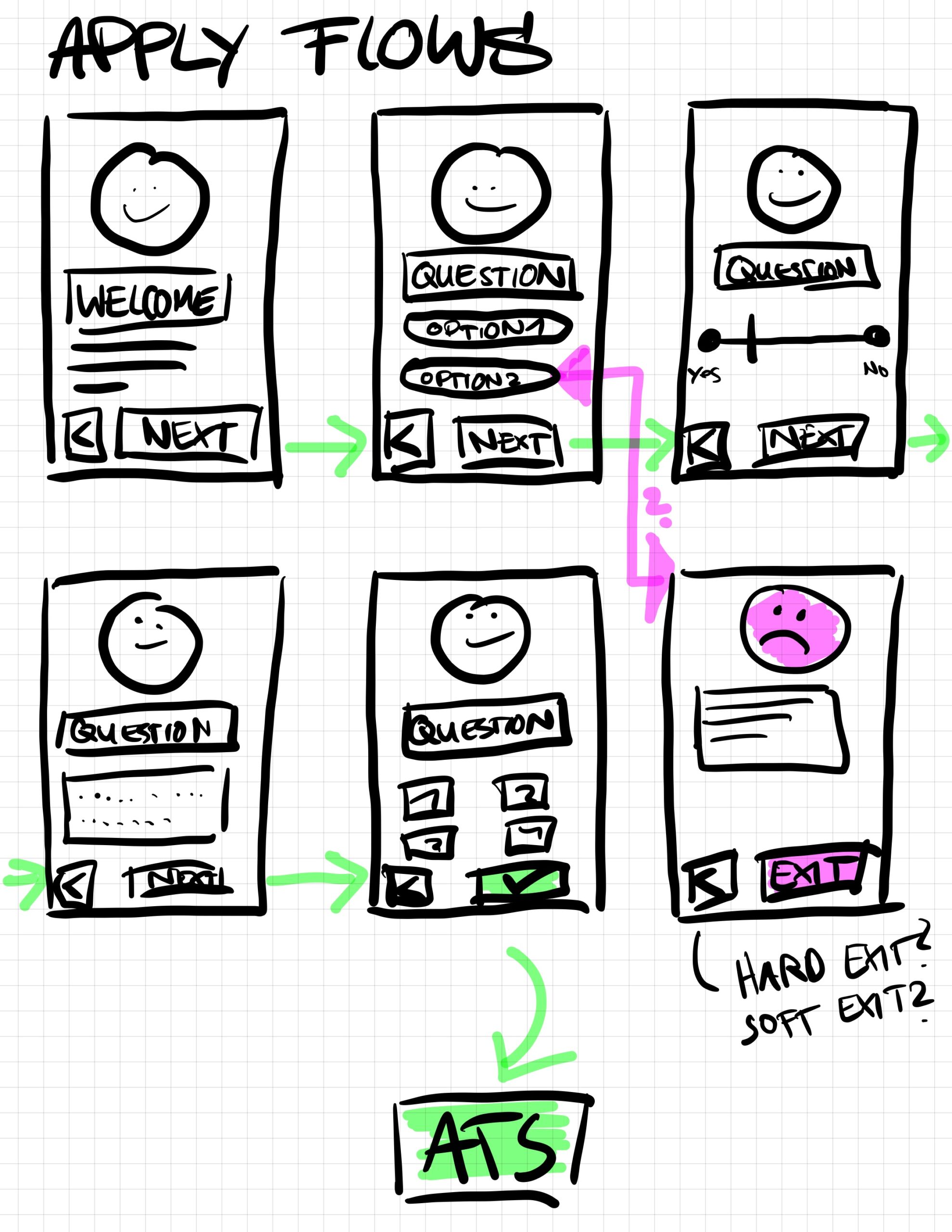
Therefore, we quickly decided to place the application process into a flow-like structure, with each page of the flow representing a question the recruiter asks you. These questions had to be answered in a breeze by the candidate in a playful and fun way. So, we started to look into several ways to answer questions and created modules for the application flows such as multiple choice fields, select fields, range sliders, and also free text fields. This gave candidates the possibility to easily flow through a couple of questions and, therefore, provide the recruiter with all the relevant information.
Making sure recruiting knows exactly what they need to know – Even without a CV
“You want to get rid of the CV? What the f*ck!” This was probably the normal first reaction of a recruiter if you told them our plan to get rid of the CV. But if you consider it for a moment and actually see the advantages, most people become quite fond of the idea. Studies show that recruiters spend an average of just 6-7 seconds on scanning the CV for the initial screening. Let’s be honest, how much relevant information do we actually take out of it during that quick scan? Probably no more than 25% of what’s written on those two pieces of paper. But if you have the chance to ask a candidate questions, you don’t need to go through a CV to find that information. Instead, you get it presented right in front of you. And you can ask the candidate exactly the questions that are relevant for you and the hiring manager, actually making the first screening and selection of candidates a lot easier.
Studies show that recruiters spend an average of just 6-7 seconds on scanning the CV for the initial screening.
The biggest win: Steering the quality and quantity of your applications
We quickly decided to place the application process into a flow-like structure, with each page of the flow representing a question the recruiter asks you. These questions had to be answered in a breeze by the candidate in a playful and fun way. So, we started to look into several ways to answer questions and created modules for the application flows such as multiple choice fields, select fields, range sliders, and also free text fields. This gave candidates the possibility to easily flow through a couple of questions and, therefore, provide the recruiter with all the relevant information.
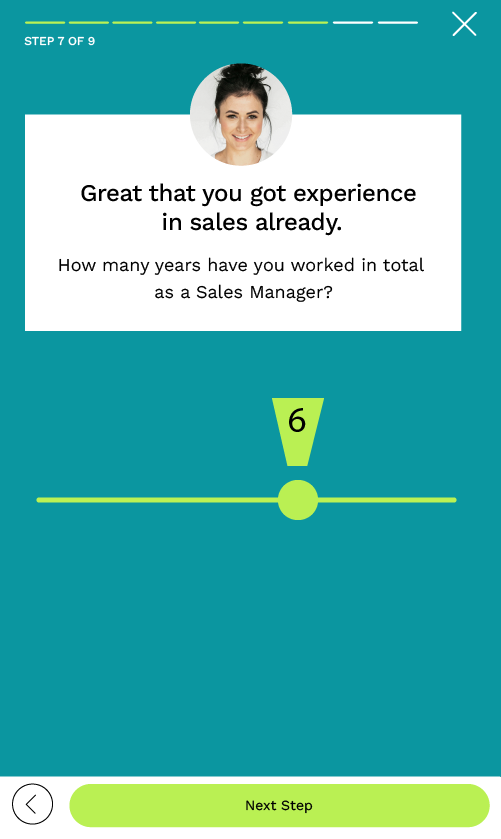
Application flow mock up
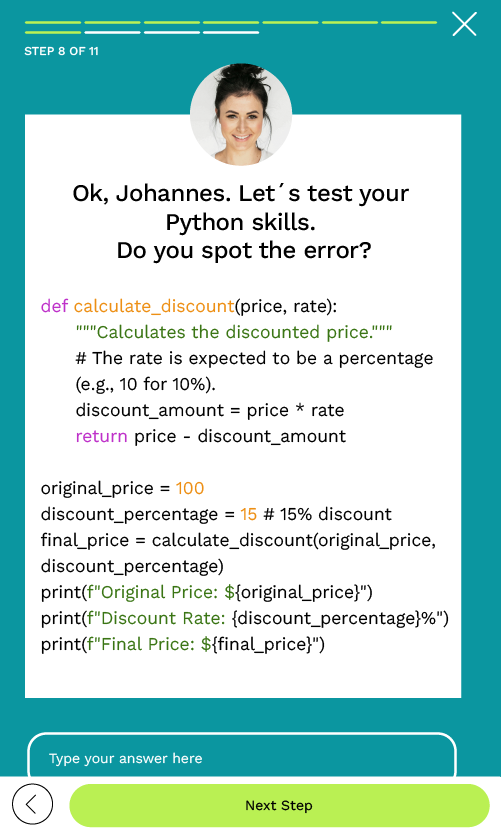
Target group-oriented flows with personalized prompts.
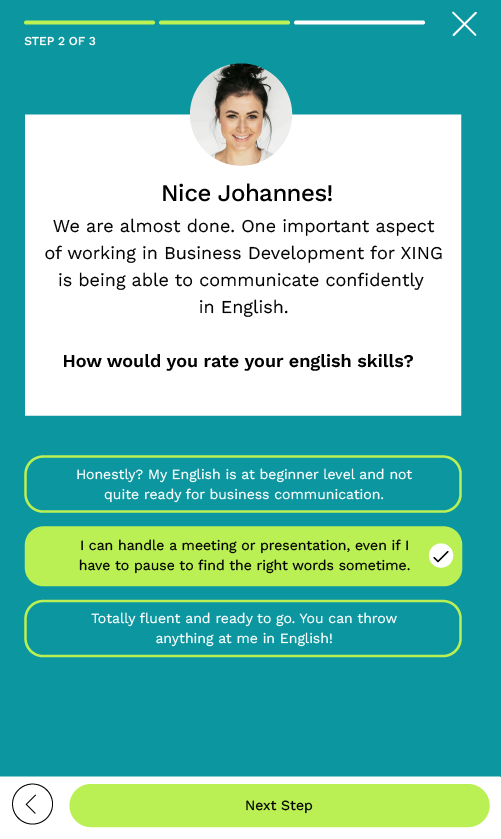
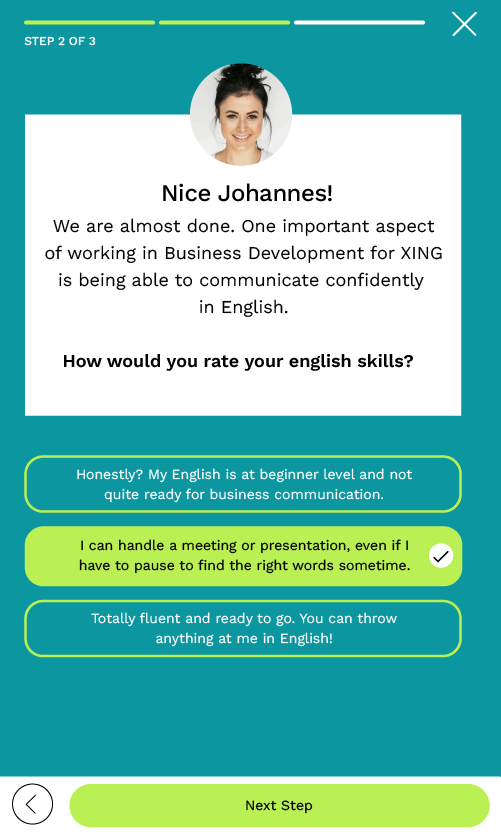
We found that what works for a developer might not work for someone in finance. We could now easily tailor the application to the specific audience, for example, by adding a coding challenge for a tech role or a different set of questions for a sales position. To make the flows feel more personal and similar to a conversation, we included personalized prompts, giving us the option to address people by name or even respond to answers candidates have given in previous questions.
4. Was it worth it ?
Building a tool like this from scratch is all about the details. We had to consider everything: how data gets transferred to our ATS, how a candidate could go back and edit their answers, and how to handle repeat applicants. And of course, there were plenty of screw-ups. I’ve never had a project run 100% smoothly, and that’s okay. The key is to quickly identify which issues are critical and which can be handled later. But to answer the question of whether the project was worth it? Absolutely! We not only created a tool that makes our recruiters’ lives easier but also one that transforms the application process from a chore into a truly personal, engaging experience. By adapting to the needs of the modern candidate, we’ve created a more powerful and effective employer brand, and most importantly, we’ve seen a very, very positive impact on our conversion rates.
Because in the end, the application process isn’t just a form; it’s the first real conversation a person has with your company. And if you make it a good one, they just might stick around.
Want to optimise your application process? Say hello! Let’s connect
By clicking submit I agree to the processing of my personal data in accordance with the Privacy Policy

Johannes Wichmann
Karolinenstraße 16
20357 Hamburg
Germany
+49 172 451 48 66